Weather Influences on Shifting Live Odds in International Tournament Soccer Matches
Olivia Richter · Oct 2, 2026
Weather Influences on Shifting Live Odds in International Tournament Soccer Matches
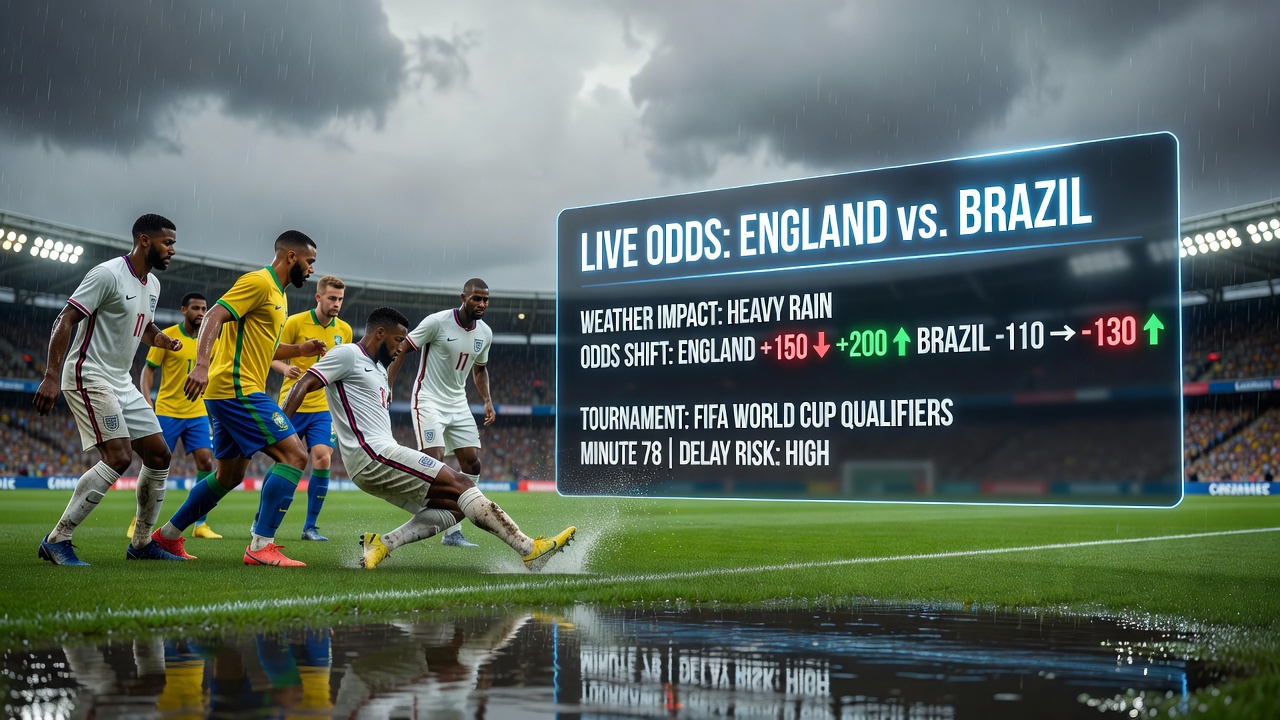
Weather conditions play a direct role in altering match dynamics during international tournament fixtures, and betting markets respond by adjusting live odds in real time as environmental factors affect player performance, ball behavior, and overall game flow. Data from multiple tournaments shows that rain, wind, heat, and humidity correlate with changes in scoring rates, possession statistics, and injury occurrences, prompting oddsmakers to recalibrate lines within minutes of observable shifts on the field.
Key Weather Variables and Their Measurable Effects
Rainfall intensity impacts pitch traction and ball speed, with studies indicating that matches played in moderate to heavy rain see a reduction in total goals by an average of 0.3 to 0.7 per game according to historical records compiled across European and South American competitions. Wind speeds above 20 kilometers per hour alter long-range passes and set-piece trajectories, leading to increased turnovers and defensive errors that live betting platforms track through automated data feeds. High temperatures combined with humidity above 70 percent accelerate fatigue, particularly in the second half, and figures from the 2022 World Cup qualifiers revealed elevated substitution rates in such conditions.
Observers note that these variables do not act in isolation, and combined effects often produce more pronounced adjustments in markets for total goals, corner counts, and player-specific props. Tournament organizers provide pitch and weather reports before kickoff, yet sudden changes such as localized thunderstorms or wind gusts force rapid updates once play begins.
Real-Time Data Integration in Betting Markets
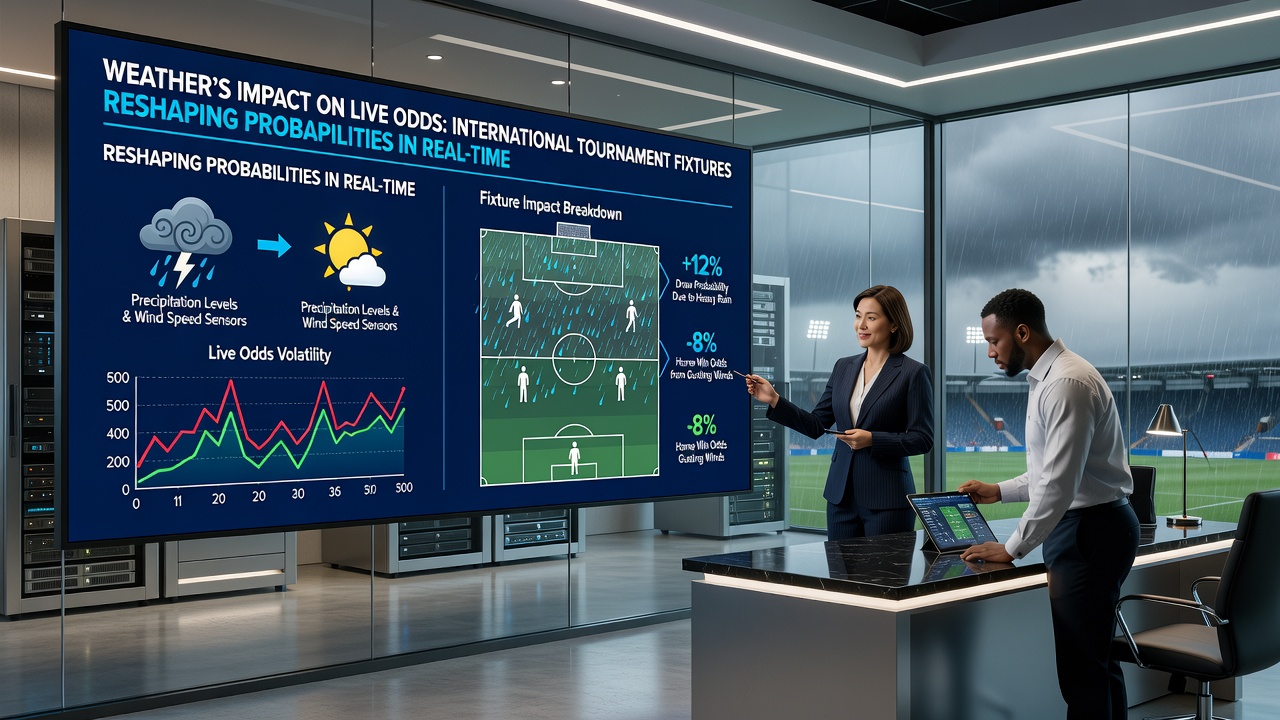
Live odds systems incorporate meteorological inputs alongside traditional statistics like expected goals and pass completion rates. Providers monitor on-site sensors and satellite updates to detect precipitation changes or temperature drops, then feed those signals into algorithms that recalculate probabilities. Research from sports analytics groups demonstrates that wind direction shifts during a match can move over/under lines by as much as 0.25 goals within a single half when teams switch ends.
During the group stages of recent continental tournaments, platforms recorded heightened volatility in first-half goal lines when rain began after the 20-minute mark. Bettors who follow these patterns often see lines tighten or widen based on cumulative weather data rather than scoreline alone.
Case Examples from Past International Events
Take the 2014 World Cup match between Brazil and Chile, where afternoon showers altered the playing surface and contributed to a lower shot volume in the second half. Live markets responded by pushing the total goals line downward after the 35-minute mark. Similar adjustments occurred during the 2018 tournament when strong winds in Volgograd affected a group-stage fixture, resulting in elevated corner counts that oddsmakers incorporated into revised propositions.
One analysis of UEFA European Championship fixtures between 2012 and 2020 found that matches with sustained rainfall exceeding 5 millimeters per hour produced statistically significant drops in average possession time for teams accustomed to drier pitches. These patterns allow markets to refine in-play offerings for both team totals and individual performance metrics.
Looking Ahead to October 2026 Tournament Fixtures
Qualifying rounds and preparatory events scheduled for October 2026 will occur across regions where seasonal rainfall and temperature swings remain common. Meteorological agencies such as the National Oceanic and Atmospheric Administration publish seasonal outlooks that tournament planners consult when setting match times, and betting operators use the same forecasts to pre-load scenario-based odds models. Historical datasets suggest that venues in transitional climate zones experience the highest frequency of mid-match weather changes, prompting more frequent line movements once play starts.
Industry reports indicate that operators now integrate radar feeds directly into their risk-management systems, allowing automated pauses or expansions of certain markets when precipitation rates spike. This infrastructure reduces exposure while maintaining continuous trading during variable conditions.
Conclusion
Weather remains an observable and quantifiable driver of live odds movement in international tournament settings. Continuous data collection from on-field sensors, combined with established correlations between environmental factors and match statistics, enables markets to update probabilities as conditions evolve. Those who track these relationships alongside scoreline and possession data gain access to a fuller picture of how external variables reshape betting opportunities throughout a fixture.