The Overlooked Role of Travel Fatigue in Shaping Cross-Border Tournament Betting Markets
Taylor Coleman · Aug 16, 2026

The Overlooked Role of Travel Fatigue in Shaping Cross-Border Tournament Betting Markets
Travel fatigue emerges as a measurable variable in cross-border tournament settings where teams and athletes move between countries with varying time zones, climates and recovery protocols. Data from sports science programs indicates that journeys exceeding six hours correlate with declines in sprint performance and decision-making accuracy during the initial 48 hours after arrival. Observers note that these patterns appear consistently across major events scheduled for August 2026, including preliminary rounds leading into the expanded CONCACAF and UEFA qualification windows.
Physiological Mechanisms Behind Performance Shifts
Disrupted circadian rhythms from eastward or westward flights alter hormone regulation and muscle recovery cycles, while jet lag compounds the issue through fragmented sleep and elevated cortisol levels. Studies conducted by the Australian Institute of Sport reveal that athletes crossing more than four time zones show a 12 to 18 percent drop in high-intensity running metrics within the first match of a tournament. Researchers tracking heart-rate variability further demonstrate that these changes persist longer in older players or those with pre-existing injury histories, creating predictable windows where team output deviates from baseline expectations.
Cross-Border Tournament Contexts and Scheduling Pressures
Events spanning multiple nations introduce additional variables such as differing pitch dimensions, altitude changes and humidity levels that interact with travel effects. In August 2026 several confederation qualifiers will feature squads traveling from South America to North American venues or from Asia to European sites, compressing recovery periods between matches. Tournament organizers publish fixture lists months in advance yet rarely adjust kick-off times to accommodate recovery science, leaving performance gaps that statistical models can quantify.
Betting Market Implications and Data Integration
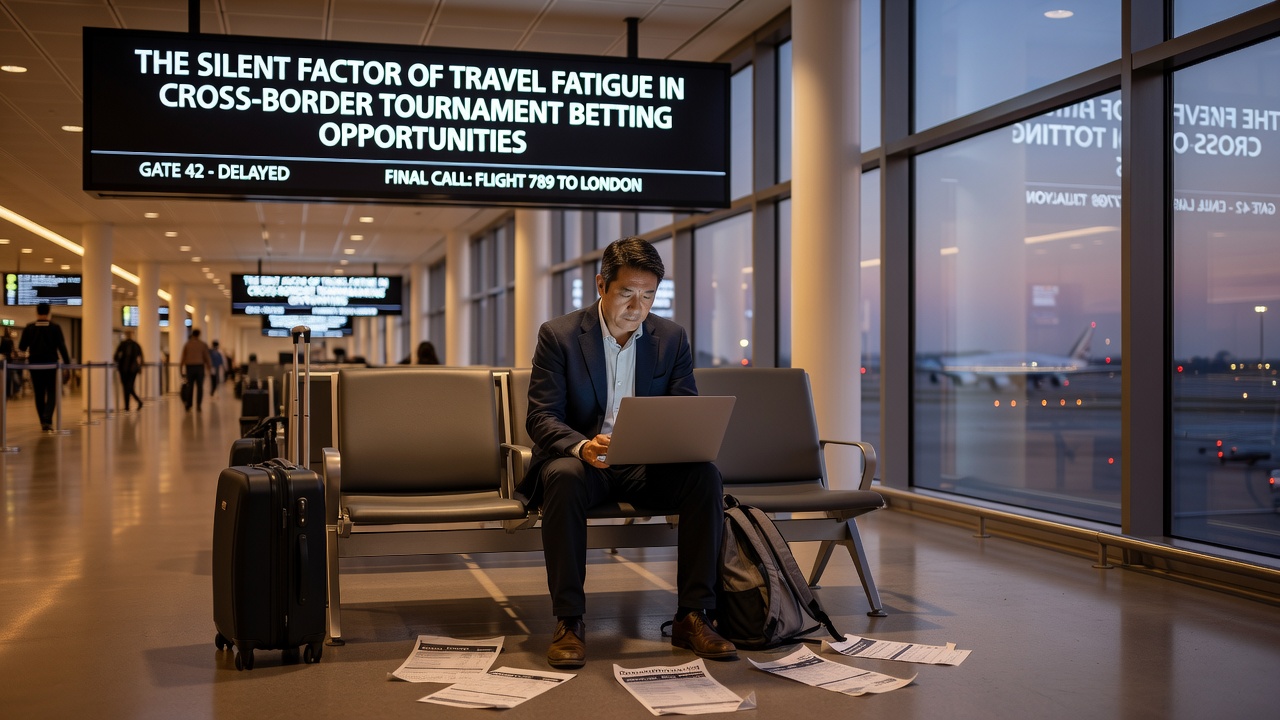
Bookmakers adjust odds primarily on recent form and head-to-head records, yet advanced analytics groups incorporate travel-distance metrics and time-zone differentials into their projections. One analysis of 2018-2022 international fixtures found that teams arriving after transcontinental flights underperformed against rested opponents by an average margin of 0.4 goals in the opening fixture. Bettors who layer these variables onto standard models identify value in underdog lines or total goals markets during early tournament stages. Industry reports from the Canadian Centre for Ethics in Sport highlight how such data integration improves forecast accuracy without relying on insider information.
Case Examples from Recent and Upcoming Events
During the 2024 Copa América several South American squads traveled directly from domestic leagues into North American venues with minimal acclimatization periods, resulting in measurable drops in pass-completion rates during opening matches. Similar patterns emerged in UEFA Nations League fixtures where eastern European teams crossed multiple zones to face western opponents. Preparations for August 2026 qualifiers already show federations experimenting with charter-flight protocols and on-site recovery suites to mitigate these effects, although implementation varies by budget and federation resources.
Regulatory and Research Perspectives
Government-affiliated sports bodies in Australia and Canada have published guidelines urging tournament organizers to factor recovery windows into scheduling. These documents cite longitudinal studies linking cumulative travel load to elevated injury risk, which indirectly influences roster availability and therefore match outcomes. Academic papers from university kinesiology departments continue to refine algorithms that convert flight data into performance probability adjustments, supplying neutral inputs for market participants seeking objective edges.
Conclusion
Travel fatigue operates as a quantifiable input rather than an anecdotal factor in cross-border tournament settings. When combined with established performance metrics it refines projections for upcoming events including those clustered around August 2026. Market participants who integrate verified travel and recovery data alongside traditional statistics encounter structured opportunities that standard form tables alone do not reveal.