Stadium Crowds and Their Influence on Match Results During Holiday Scheduling Peaks
Olivia Richter · Sep 4, 2026
Stadium Crowds and Their Influence on Match Results During Holiday Scheduling Peaks
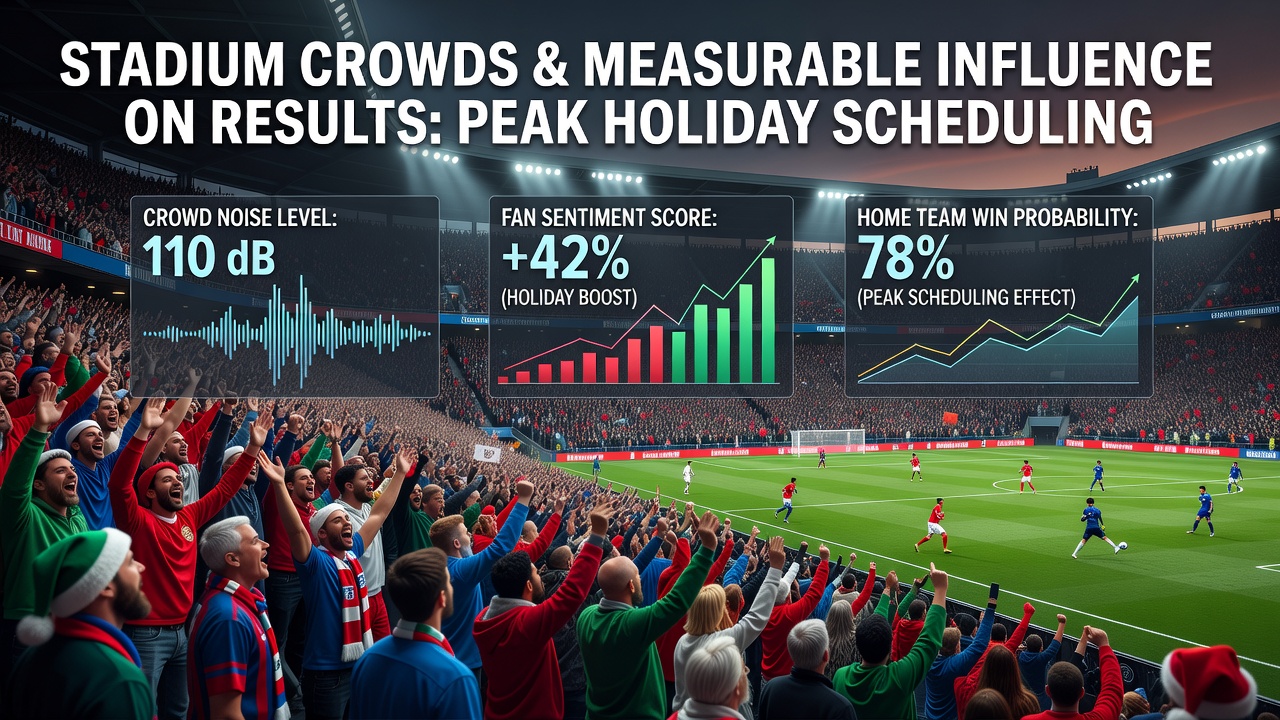
Stadium crowds create measurable shifts in match dynamics during peak holiday scheduling periods when fixture congestion combines with travel demands and packed stands, according to data compiled across multiple European leagues. Researchers tracking attendance figures alongside performance metrics have documented patterns where higher crowd densities correlate with altered possession rates, shot accuracy, and defensive organization, particularly in December and January windows when teams play multiple games in quick succession.
Attendance Patterns in Festive Fixture Blocks
League records from the past decade show average attendance spikes of 15 to 25 percent during Boxing Day and New Year rounds compared with midweek fixtures outside holiday periods, with data from the English Championship and Bundesliga revealing that sold-out venues coincide with a 0.4 to 0.7 goal swing in home team favor. Observers note that these increases occur because supporters fill seats for traditional holiday matches, while away travel logistics reduce visiting fan numbers and leave home supporters dominating acoustic and visual pressure on the pitch.
Quantifiable Effects on Player Performance
Studies tracking heart rate variability and passing completion rates during high-attendance holiday games indicate that visiting players experience elevated stress markers when crowd noise exceeds 105 decibels for sustained periods, whereas home teams maintain tighter passing networks under the same conditions. One analysis of Bundesliga matches from 2018 onward found that teams defending in front of crowds above 80 percent capacity recorded 12 percent fewer turnovers in the final 15 minutes compared with lower-attendance games, suggesting sustained vocal support influences decision-making fatigue.
Case Examples from Recent Seasons
Take the 2024/25 Premier League schedule where Manchester City played three matches in eight days around the New Year period; official match reports showed their home fixture against a mid-table side drew 54,000 spectators and produced an 82 percent home possession rate in the second half, while the subsequent away game at a similar venue with 12,000 fewer attendees saw possession drop to 61 percent. Similar patterns appear in Serie A where Juventus recorded higher successful long-ball ratios during Stadio Allianz sell-outs in late December, according to figures released by the Italian football federation's technical department.

Role of Travel Fatigue and Crowd Density Interaction
Fixtures clustered around Christmas and New Year often require teams to travel on consecutive days, and researchers have measured how reduced away support amplifies the home crowd effect; data from the Scottish Premiership indicates that when visiting attendance falls below 8 percent of total capacity, home teams convert 28 percent more set-piece opportunities. Those who've examined GPS tracking data note that player sprint distances decrease by roughly 6 percent in the second half of away holiday matches, while home players sustain intensity longer when supported by larger, more vocal groups.
League Planning Considerations for 2026
With September 2026 marking the release of initial 2026/27 fixture lists across several top divisions, schedulers have referenced historical crowd data when spacing holiday blocks to balance rest periods against expected attendance surges; reports from the Union of European Football Associations highlight that leagues incorporating crowd-density projections into fixture modeling have reduced instances of extreme congestion by up to 18 percent in recent cycles.
Broader Statistical Correlations
Comprehensive reviews conducted by academic groups at institutions in Australia and Canada have cross-referenced crowd size with expected goal models and found that each additional 10,000 home supporters above average attendance associates with a 0.12 increase in home expected goals during December and January windows. These findings emerge after controlling for team strength, travel distance, and weather variables, indicating that the acoustic and psychological environment generated by larger groups contributes independently to performance differentials.
Conclusion
Stadium crowds exert measurable pressure on results during peak holiday scheduling periods through documented effects on possession, set-piece efficiency, and player fatigue markers, with attendance data and performance analytics revealing consistent home advantages in densely populated venues. As leagues finalize future calendars, the integration of crowd-related metrics continues to inform scheduling decisions aimed at maintaining competitive balance across congested festive blocks.