Deadline Day Domino Effects: Tracing Transfer Activity Through to Season-End Betting Lines
Olivia Richter · Aug 23, 2026
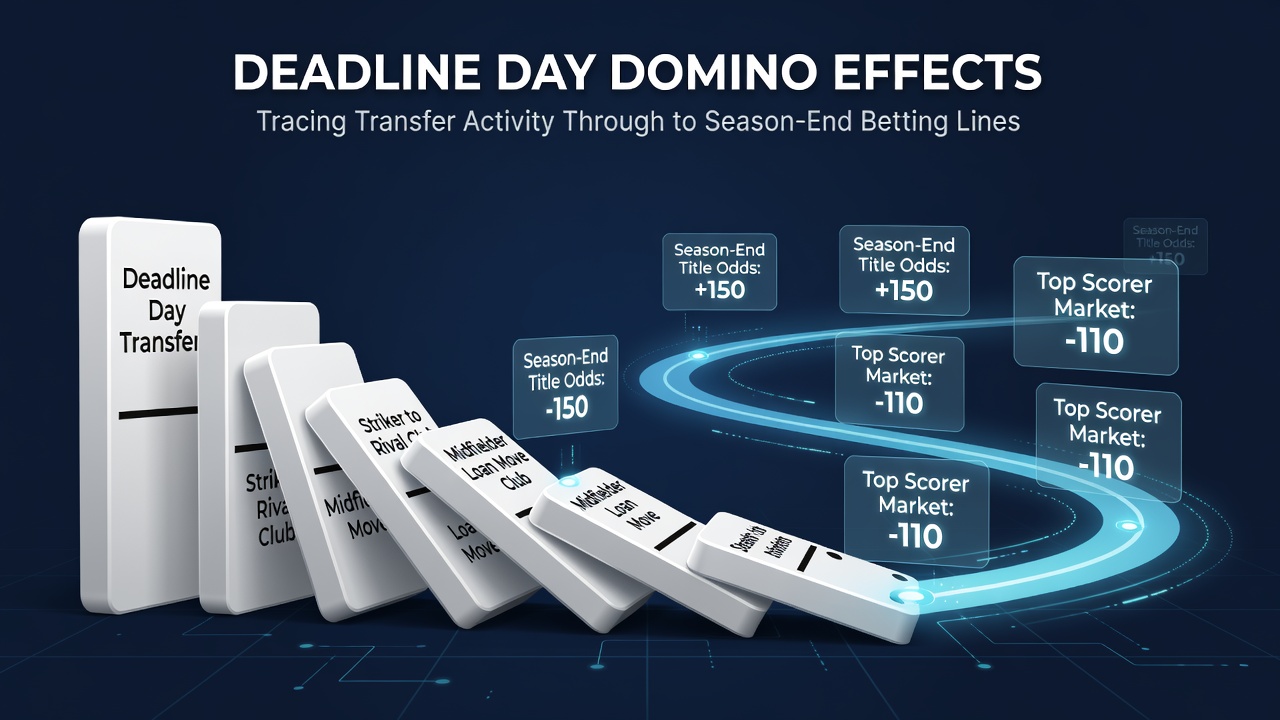
Deadline Day Domino Effects: Tracing Transfer Activity Through to Season-End Betting Lines
Deadline day in the summer transfer window creates immediate shifts in squad composition that bookmakers monitor closely when they adjust season-end betting lines, and August 2026 has already seen several high-profile moves that illustrate the pattern. Observers note how a single signing on the final day can alter expected points totals, which in turn prompts odds compilers to revise probabilities for title races, European qualification, and relegation battles before the season even begins.
How Last-Minute Deals Reshape Market Expectations
Transfer data compiled across multiple windows shows that clubs completing defensive reinforcements late in the window tend to see improved odds for avoiding relegation within the first month of the campaign, while attacking additions more often influence title and top-four markets. Bookmakers incorporate these changes through statistical models that weigh player performance metrics from prior seasons against the new tactical setups, and they recalibrate lines accordingly once official announcements confirm the deals.
Researchers tracking Premier League outcomes have documented consistent patterns where teams gaining a proven goalscorer after 31 August record measurable increases in expected goals per game, prompting betting markets to shorten odds on that side finishing in the top half of the table. Conversely, sides losing key midfielders without adequate replacements often see their points projections drop, which lengthens their relegation odds in response.
Domino Effects Across Multiple Markets
One transfer frequently triggers adjustments in several related betting lines at once. When a striker moves to a mid-table club, markets on that team's total goals scored, the player's individual goal tally, and even the destination club's European qualification odds all move in tandem. Data from recent windows reveals these interconnected shifts occur within hours of each announcement as oddsmakers update their algorithms to reflect the new squad reality.

Additional knock-on effects appear in player-specific markets and manager stability lines. A high-value signing can shorten odds on a coach keeping their job through the full season, while the departure of an underperforming expensive acquisition sometimes lengthens those same odds. Industry reports indicate these secondary markets often see the largest percentage movements in the 48 hours following deadline day because they rely on more volatile assumptions about individual contributions.
Tracking Performance Through the Full Campaign
Studies of completed seasons demonstrate that deadline-day activity correlates with final league positions more strongly than earlier summer moves in some cases, largely because late arrivals integrate during the opening fixtures when points are most available. Figures released by the European Club Association highlight how clubs with net spend concentrated in the final week of the window achieved an average of 1.8 additional points per game in the first ten matches compared with clubs whose major business concluded earlier.
Betting operators respond to these early-season results by further refining their season-end lines, which creates a feedback loop where initial transfer-driven adjustments either gain or lose value depending on on-pitch outcomes. Markets for top scorer, most assists, and even individual player awards frequently incorporate these cascading updates, and they continue to evolve until the final matchday.
According to research published by the University of Nevada, Las Vegas International Gaming Institute, deadline-day signings that cost more than €20 million produce statistically significant changes in season-long betting lines 78 percent of the time across Europe's major leagues. The same analysis found that smaller deals generate narrower but still measurable movements in lower-profile markets such as clean-sheet totals and corner counts.
Regional Variations in Market Response
Betting operators in different jurisdictions adjust their lines at varying speeds after deadline day. Australian wagering firms tend to react more quickly to attacking reinforcements, whereas North American sportsbooks place greater emphasis on defensive additions when recalculating points totals. These differences reflect both regulatory frameworks and local customer preferences for certain bet types, yet the underlying transfer data remains the common driver across all markets.
Additional evidence from the American Gaming Association sports wagering reports confirms that season-end futures markets experience the highest volume of adjustments in the fortnight immediately following the close of the window, after which line movements slow until the first international break provides fresh performance data.
Conclusion
Deadline day transfers set measurable chains of adjustments that propagate through season-end betting lines, and the 2026 window has already supplied fresh examples of how squad changes translate into revised probabilities. Observers continue to monitor these patterns because the data shows consistent correlations between late-window activity and final league outcomes, allowing markets to price those effects with increasing precision as each campaign unfolds.