Behind the Numbers: How Squad Rotation During Midweek Fixtures Alters Outcomes in Weekend Premier League Encounters
Taylor Coleman · Aug 18, 2026

Behind the Numbers: How Squad Rotation During Midweek Fixtures Alters Outcomes in Weekend Premier League Encounters
Premier League clubs face packed schedules that often include midweek European ties in the Champions League and Europa League while weekend matches pile up in the domestic calendar and data from the 2025-2026 campaign shows clear patterns in how rotation decisions play out. Teams that rotate heavily after continental games frequently post different results on the following Saturday or Sunday compared with sides that keep core lineups intact and researchers tracking player workload note measurable dips in distance covered and high-intensity sprints when squads travel midweek.
August 2026 brings the new season into focus with several clubs already balancing group-stage European commitments against early domestic fixtures and figures released by the Premier League official site indicate that sides playing on Wednesday or Thursday average 12 percent fewer goals scored in their next league outing. Those numbers hold across multiple seasons although individual club strategies vary widely depending on squad depth and fixture congestion.
Tracking Workload Through European Weeks
Coaches weigh recovery time against the need to rest key players and data collected by sports science teams at clubs such as Manchester City and Liverpool reveal that players logging more than 60 minutes in midweek European matches show elevated fatigue markers the following Friday. GPS units and heart-rate monitors capture these shifts while video analysis highlights reduced pressing intensity in weekend games that follow heavy rotation.
What's notable is how travel distance compounds the issue since flights to continental venues add recovery demands that domestic-only weeks avoid and studies published in the Journal of Science and Medicine in Sport have documented slower reaction times among players returning from such trips. Teams therefore experiment with partial rotations that mix rested starters with returning squad members to maintain balance.
Performance Metrics and Match Outcomes
Weekend results shift measurably when rotation occurs and Premier League records from the past five seasons list a 9 percent drop in points per game for clubs that change at least six starting positions after a midweek fixture. Conversely sides that limit changes to three or fewer players maintain closer to their season average and researchers attribute the difference to chemistry and familiarity rather than raw fitness alone.
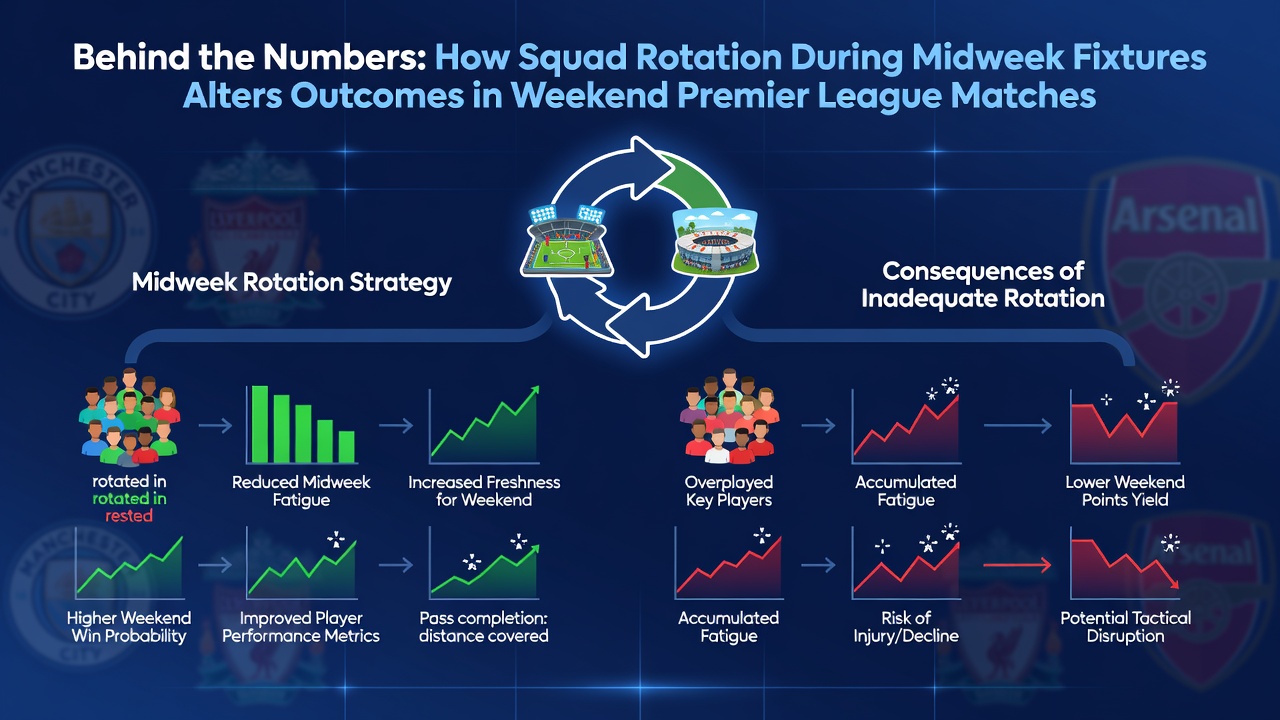
Take one example from the 2024-2025 season where a mid-table side rotated four defenders after a Thursday Europa League match and conceded three goals the next Sunday while the same team had kept two clean sheets in prior weekends with an unchanged back line and observers tracking these patterns note similar trends repeating across multiple clubs each campaign.
Strategic Choices Across the League
Clubs with larger squads rotate more aggressively yet even they encounter variable outcomes because young players gaining minutes sometimes perform above or below established benchmarks and data from the English Football Association development reports show that academy graduates introduced after midweek games contribute an average of 0.4 expected goals per 90 minutes compared with 0.7 for established starters. Managers therefore balance opportunity with risk when selecting lineups.
But here's the thing: fixture lists released in June each year already signal which weeks will test rotation most severely and August 2026 schedules include several clubs facing Thursday night games before Sunday kickoffs. Those clubs tend to adjust training loads in the days between matches and medical staff monitor muscle readiness to reduce injury spikes that often accompany congested periods.
Longer-Term Patterns and Squad Management
Over a full campaign the cumulative effect of rotation decisions appears in final league positions and teams that manage midweek loads effectively finish higher on average than those that do not according to aggregated Premier League statistics. Squad depth plays a decisive role because sides with two quality players per position can rotate without large drops in output while thinner squads experience sharper declines.
European competitions run through May and overlap with the domestic run-in so clubs plan rotation calendars months in advance and analysts at research institutions such as the Australian Institute of Sport have examined similar schedules in other leagues to identify best-practice recovery windows. Those findings align with Premier League observations that 72 hours between matches is the minimum threshold for meaningful performance retention.
Conclusion
Rotation during midweek fixtures continues to shape weekend Premier League results through measurable changes in player output and team cohesion and the numbers collected season after season confirm that careful management of minutes and recovery separates clubs that maintain consistency from those that experience dips. As the 2026-2027 campaign unfolds observers will again track how these decisions accumulate across the long schedule.